

Search Blog
Hit enter to search or ESC to close
Trending Now


Shavuot, Yitro and Ruth - Those Who Walk Away and Those Who Stay
- Get link
- X
- Other Apps

Parshas Shemos - We Know the End and the Beginning, Not the Middle
- Get link
- X
- Other Apps

Posts
Parshas Vaera - The Order of the Plagues
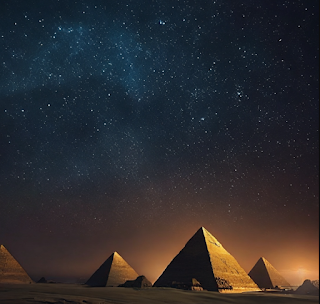
We all know the names of the ten plagues that struck Egypt. And some of us may even remember the order that they took place in. But is there any reason for the particular order? The plagues do become somewhat more devastating with time, but not entirely. Take the plague of darkness, which was traumatic, but not truly damaging, as opposed to the invasion of wild beasts. There is however an order of meaning to the order of plagues. The plagues don't necessarily move forward in degrees of devastation, but in degrees of altitude. From the first to the ninth plague, they begin at the very bottom, in the river, below the surface of the earth, and ascend to the sky, while the final plagues leading up to the end, hail, locusts, and darkness, emerge from the heavens. In between them, the plagues slowly ascend, rising from the Nile, blood and frogs, up to the third plague, vermin, which arise when the dust of the earth is struck. The fourth and fifth plagues involve the animals...
- Get link
- X
- Other Apps

Parshas Shemos/Vaera - The Birth of a New Religion and the Age of Miracles
(You can listen a version of this thought on my new Human Parsha podcast.) At the beginning of Parshas Vaera, G-d informs Moshe that the revelation of the name 'Hashem' is a unique one that had not been truly revealed to any previous generation including that of Abraham, Isaac and Jacob. When Moshe had asked what name of G-d should he tell the Jews sent him, the 'Name' was given for the first time. Without getting too esoteric, what does the revelation of the 'Name' Hashem mean? The name Hashem until now had been used exclusively by members of Avraham's immediate family. Outsiders however use the name 'Elokim', 'Adon' or other names meaning G-d. Must as in contemporary times a broad range of peoples use a term denoting a single Creator of the universe, but do not necessarily share values or beliefs, so too the people of that time had the concept of a Creator. Indeed, Abraham at one point encounters a 'priest' who serves a High Ho...
- Get link
- X
- Other Apps

Shavuot - Why Don't We Commemorate the Giving of the Torah?
The holiday of Shavuot is widely celebrated by Jews, not for its traditional agricultural meaning, but as the day when the Torah was given to the Jews on Mount Sinai. And yet there is no mention in the Torah of any such thing regarding Shavuot. Furthermore, the Torah designates no special day or celebration of the giving of the Torah. Mount Sinai does not become a place of any special religious significance and even if Jews were certain where it's located, there is no thought of returning there for a celebration. Likewise, the burial spot of Moshe, we are explicitly told in the Torah, has been hidden away where no one may find it. Why is there such a seeming avoidance of forming a more direct connection with the place, the time and the man through whom the Torah was given? Shavuot serves as the other side of a dual holiday, divided by the counting of the Omer with Pesach. The holiday of Passover was enacted to remember the exodus. Jews are commanded to remember the Exodus in...
- Get link
- X
- Other Apps

Parsha Beha'alotcha - Modesty and the Menorah
Parshas Beha'alotcha begins with the command to light the menorah. It ends with us being told that Moshe was the humblest man who ever lived. What is the connection between the two? In the Beit Hamikdash, the Holy Temple, the windows were narrow on the inside and widened on the outside because the temple did not need the light of the menorah, the world needed that light. So too a modest man is narrow on the inside and wide on the outside, making himself small so that his light shines forth. In contrast, an arrogant man is wide on the inside, convinced of his own genius, but narrow on the outside, so that little light from him reaches the rest of the world. It was Moshe's humility, like the narrow windows of the temple that funnel the light of the Menorah to the world, that made him such an enduring influence. While modern society preaches self-esteem, Moshe's lack of it often caused leadership problems, yet made him shine so brightly that he had to wear a mask to hide his l...
- Get link
- X
- Other Apps

Shabbos HaGadol - The Hearts of the Fathers and the Sons
Why is the Sabbath before Pesach known as 'Shabbos HaGadol' or the Great Shabbos? The simplest answer comes from the reading of the Haftorah, after the Torah reading, which comes from Malachi 3 which concludes with, "Behold I will send you Elijah the prophet before the coming of the great and awesome day of the Lord." Or, in Hebrew, "HaGadol VeHanora". What does the reading from Malachi, which involves a reproof of the Jewish people and a promised final redemption have to do with Pesach? But then why does Elijah the Prophet show up at the Seder? The answer once again is in Malachi. "I will send you Elijah the prophet before the coming of the great and awesome day of the Lord, that he may turn the heart of the fathers back through the children, and the heart of the children back through their fathers-lest I come and smite the earth with utter destruction." There are two times that Elijah is set to appear, the Bris, the circumcision, and the Passov...
- Get link
- X
- Other Apps
Parsha Terumah - The Sacredness of Objects Derive From Our Treatment of their Makers
Parshas Terumah begins with a sharp contrast between the building of the Mishkan, the first tabernacle, and the Beit Hamikdash, the Holy Temple. To the Mishkan, donations are solicited from anyone whose heart is moved, while King Solomon relies on draft labor brigades and workers from King Hiram, a foreign monarch, to construct it. And so the First Temple eventually falls and is destroyed. The Haftorah for the previous parsha, Mishpatim, tells one of the causes. The account in Jeremiah relates how under siege by the Babylonian invaders, the nobles of the kingdom make a covenant to free their Hebrew slaves. Once the siege is lifted however they enslave them once again. The breach of the covenant to free their slaves is one of the causes of the destruction and fall of the kingdom. Mishpatim begins with the laws of slavery because regulating the rights of even the people at the lowest state, thieves who have been sold into temporary bondage for their crimes, is at the foundation of ethics...
- Get link
- X
- Other Apps
Parsha Bo - The Birth of Judaism
Until now, Moshe has mostly served as G-d's messenger to Pharaoh. With Bo, for the first time, Moshe steps into what will become his primary role as G-d's messenger to the Jewish people. In Parsha Bo, Moshe is given a number of commandments, Rosh Chodesh, the celebration of the new month which makes it possible to celebrate the cycle of holidays, Passover, the commemoration of the coming exodus, the dedication of the first born, in counterpoint to the death of the Egyptian first born, and even a reference to Tefillin. At the start of Parsha Bo, G-d reveals that everything that has happened was primarily so that, 'Lema'an Tisapher Beoznei Binecho UBen Binecho", so that the Jews would retell the story to their children and their children's children. Pharaoh and the might of Egypt had been mere object lessons for G-d. The students were the Jews. In announcing the final plague that will strike down the firstborn, we are told that G-d will execute judgement on all...
- Get link
- X
- Other Apps